
Why Your Next Trip Needs a Digital SIM
The Best eSIM for Travel in 2025: A Complete Guide
Most travelers don’t realize that over 80% of roaming charges can be eliminated by switching to a digital SIM. A best eSIM for travel is a tiny chip built into your phone that lets you instantly activate a local data plan without swapping physical cards. You simply scan a QR code or download an app, choose a destination-specific or global plan, and connect to high-speed networks the moment you land. This effortless activation process saves you from hunting for SIM kiosks or paying outrageous hotel Wi-Fi fees.
Why Your Next Trip Needs a Digital SIM
Your next trip demands connectivity without compromises, which is exactly why you need a digital SIM. The best eSIM for travel eliminates the scramble for local SIM cards or costly roaming plans, letting you activate data instantly upon landing. You retain your primary number for two-factor authentication while enjoying affordable, high-speed access abroad. Whether navigating unfamiliar streets or sharing real-time updates, a digital SIM for travel ensures you’re always online without overpaying. Ditch physical chips and physical queues—your itinerary flows smoother when connectivity is one scan away, not a bureaucratic errand.
Ditching plastic SIMs and roaming fees
Ditching the plastic SIM card and its associated roaming fees is the core practical benefit of switching to a digital SIM for travel. Instead of hunting for a local vendor or paying your home carrier’s exorbitant daily rates, you install a travel eSIM profile before departure. This provides immediate, local-rate connectivity upon arrival, effectively eliminating surprise bills for data, texts, and calls. You also avoid the physical hassle of swapping nano or micro SIMs and risk losing the tiny card. Eliminating roaming surcharges transforms trip budgeting from a gamble into a fixed, known cost.
- Activate a regional data plan before flying to bypass carrier roaming agreements entirely.
- Keep your home number active for calls while using the eSIM for mobile data.
- Purchase plans by gigabyte allowance, not by the day, to control spending on overage fees.
- Switch between local eSIM providers mid-trip without changing a physical card.
How eSIMs connect you instantly upon landing
Forget fumbling with a physical SIM tray while juggling luggage. With an eSIM, you’re connected the second your plane hits the tarmac. Before departure, you simply scan a QR code from your provider to install the profile. As soon as you deactivate airplane mode, your phone auto-detects the local network and activates the plan. You skip the airport kiosk queue and avoid hunting for Wi-Fi passwords. It’s truly seamless, making instant connectivity upon landing a game-changer for jet-setters.
- Install the eSIM before your flight using a QR code or app.
- Disable airplane mode after landing to auto-activate the local network.
- No physical swap or store visit required—just turn on your phone.
- Your device picks the strongest local signal instantly for data use.
Top Global eSIM Providers Ranked
For travelers sorting through **top global eSIM providers ranked**, Airalo consistently leads for budget-friendly, localized regional plans, while Holafly is the go-to for unlimited data with no throttling. If you need rock-solid coverage across multiple countries, **best eSIM for travel** often points to GigSky for its extensive carrier partnerships, or Nomad for transparent pricing and easy top-ups. Ubigi wins in Japan and Asia for speed. Each provider shines best when you match their coverage to your specific destination, not just their brand hype.
Airalo: budget-friendly data packs across 190+ countries
For travelers prioritizing cost, Airalo leads with budget-friendly data packs across 190+ countries, offering plans starting as low as a few dollars per gigabyte. You can purchase a regional eSIM for, say, Europe or Asia at a fraction of carrier roaming rates, with instant activation upon arrival. No SIM hunting, no surprise bills; just choose your destination, install the digital profile, and stay connected on reliable local networks.
- Regional packs cover multiple nations in one affordable bundle, ideal for multi-country trips.
- Top-up options let you add data mid-trip without changing plans or paying penalty fees.
- Flexible validity from 7 to 30 days matches short layovers or extended vacations.
Holafly: unlimited data plans with no throttling
For travelers prioritizing constant connectivity, Holafly’s unlimited data plans with no throttling are a standout choice among top global eSIM providers. Unlike many carriers that slow speeds after a cap, Holafly delivers truly unlimited high-speed data, making it ideal for streaming maps or video calls abroad. Their regional and global passes cover over 160 destinations, with simple activation via app.
Does Holafly’s unlimited plan ever throttle video quality? No, Holafly does not enforce throttling on any content, ensuring full-speed access for streaming, browsing, and social media throughout your trip.
Ubigi: reliable coverage for frequent flyers
For frequent flyers, Ubigi offers reliable coverage that prioritizes connectivity across major global hubs. Its strength lies in deep partnerships with top-tier local networks, ensuring consistent data speeds in airports and city centers. Plans are tailored for short, high-volume trips, with easy top-ups via a straightforward app. This makes Ubigi a practical choice for travelers who need consistent connectivity while flying between regions, avoiding the gamble of spotty public Wi-Fi or expensive roaming fees.
Nomad: pay-as-you-go flexibility for short trips
For short trips, Nomad shines with its pay-as-you-go eSIM flexibility. You buy data in small, specific chunks, like 1GB for a weekend, avoiding wasted credit. Plans activate instantly and are perfect for a few days abroad, letting you top up if your layover extends. It’s ideal for travelers who don’t want a monthly commitment, just simple connectivity for a quick getaway without hidden fees.
Regional Specialists for Specific Destinations
When selecting the best eSIM for travel, regional specialists for specific destinations outshine global providers by tailoring coverage and data speeds to local networks. For example, a Japan-focused eSIM ensures access to docomo or SoftBank, not generic roaming. Q: Why choose a regional specialist over a global plan? A: Because they prioritize local towers for faster, cheaper connectivity in that one country. In Thailand, a regional eSIM gives you AIS or TrueMove priority, avoiding the slowdowns of multi-country plans. This targeted approach means you pay only for top-tier service where you actually need it, making each trip seamless. For a single-destination trip, a regional specialist is the optimal, efficient choice.
Europe: Orange Holiday and Vodafone eSIMs for multi-country travel
For cross-border European trips, the Orange Holiday Europe eSIM offers a robust 24-hour activation period after first use, ensuring your data doesn’t expire mid-journey. Vodafone’s Europe eSIM, conversely, often provides larger high-speed data caps perfect for streaming and navigation across multiple countries. Both eliminate roaming fees from Paris to Prague. Orange excels with its clear 24-hour day count, while Vodafone suits heavy users needing more gigabytes. Select Orange for sequential country hopping; choose Vodafone for constant, high-volume connectivity.
Asia: Japan Rakuten and Thailand AIS prepaid eSIMs
For Japan travel, the Rakuten eSIM prepaid plan offers a practical, app-based experience with no physical SIM needed, providing reliable coverage across major cities and rural areas on its native network. In Thailand, the AIS prepaid eSIM delivers strong 4G/5G speeds and includes access to tourist-friendly data packages, often with direct top-up through the My AIS app. Both options allow instant activation before arrival, eliminating airport queues. For short trips, Rakuten’s daily data passes and AIS’s 8- or 15-day tourist SIMs give travelers straightforward, cost-effective connectivity without long-term contracts.
North America: T-Mobile prepaid versus Verizon postpaid options
For North America, your choice hinges on coverage versus simplicity. T-Mobile prepaid via eSIM offers a dynamic, budget-friendly solution with strong urban 5G and unlimited data plans you can activate instantly—ideal for city-hopping travelers. In contrast, Verizon postpaid provides unmatched rural and national park coverage, but requires a credit check and a longer commitment. If you prioritize hassle-free connectivity in major hubs, best esim for travel favors T-Mobile prepaid; for reliable access in remote landscapes, Verizon postpaid wins despite the extra setup hurdles.
Latin America: Claro and Movistar eSIMs for stable connectivity
For stable connectivity across Latin America, eSIMs leveraging Claro and Movistar networks offer optimal coverage in both urban and remote areas. These two providers dominate the region, ensuring consistent LTE/5G signal in countries like Mexico, Argentina, and Peru. A Claro eSIM excels in Central America and Brazil, while Movistar eSIMs provide stronger performance in the Southern Cone and the Andes. Both support instant activation and let you avoid roaming fees by connecting to local towers. Q: Are Claro and Movistar eSIMs reliable for rural travel in Latin America? A: Yes, they maintain stable signal in many rural zones where smaller carriers fail, especially along highways and in larger towns.
Key Factors to Compare Before Buying
You’re staring at your departure board in JFK, juggling three eSIM tabs on your phone. The real trick isn’t picking a brand—it’s matching coverage maps to your exact stops. Compare data caps per dollar, not just headline prices, because a 10GB plan that throttles after 3GB in Osaka ruins your train navigation. Also, check whether top-ups are instant or require a new profile—crucial when your connecting flight lands at 2AM. Q: Should I buy regional or local eSIMs? A: If you’re island-hopping across Bali, a regional plan fails when you land in Komodo; local providers rule there. Finally, scan the fine print on tethering—many travel eSIMs block hotspot sharing, leaving your laptop useless in a coworking space in Berlin.
Data caps vs. unlimited plans: what suits your scrolling habits
When selecting the best eSIM for travel, your scrolling habits dictate whether a data cap or unlimited plan fits. For light users checking maps and messaging, a capped plan avoids overpaying. Heavy streamers or remote workers need unlimited to prevent throttling mid-trip. A fair-use policy often caps “unlimited” speeds after heavy usage, so read the fine print.
- Daily caps suit sporadic browsing; unlimited suits constant video or social media use.
- Capped plans are cheaper for short trips; unlimited justifies the cost for extended stays.
- Throttled unlimited plans can frustrate if you exceed soft limits—check the provider’s speed after cap.
Coverage maps: checked signal strength in remote areas
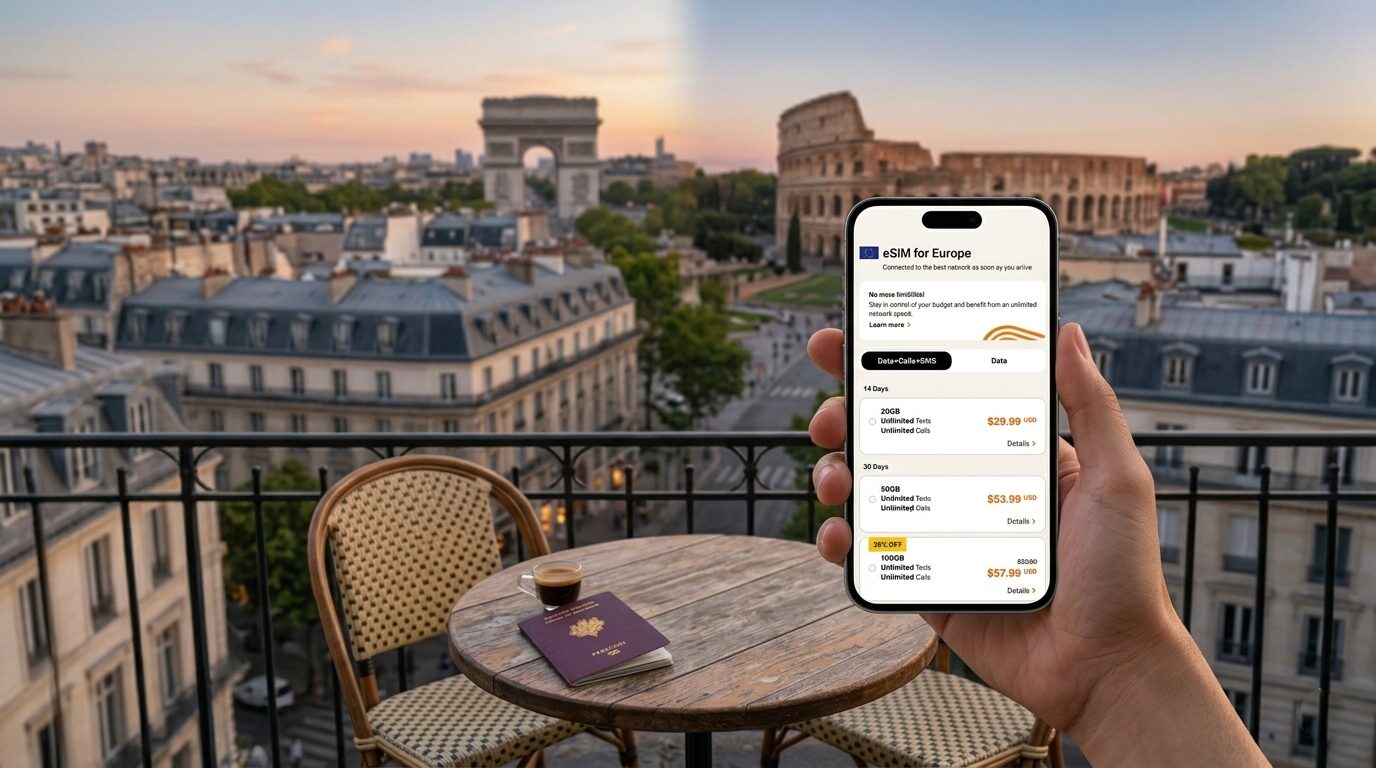
When comparing eSIMs for travel, don’t just look at city coverage. Check each provider’s coverage map for specific signal strength in the remote areas you plan to visit. A great city network often collapses in a national park or mountain village. The key is to zoom into those exact spots on the map, not just glance at a country outline. You’ll often find that a local or regional provider has far stronger signal in those isolated zones than a global brand.
Q: How can I verify signal strength in a truly remote location?
A: Use the eSIM provider’s own interactive map. Zoom into the exact coordinates of your accommodation or trekking route. Look for “partner network” logos on the map, as they often indicate stronger local towers in hard-to-reach spots.
Validity windows: matching plan duration to your itinerary
The plan’s validity window must directly match your itinerary’s length to avoid waste. A 7-day plan expires precisely 168 hours after activation, so a 10-day trip requires a 15 or 30-day duration. Short windows suit weekend getaways; longer itineraries need month-long validity. Overlapping validity periods—buying a 30-day plan for a 12-day trip—pays for unused days. Always check that the plan covers your full travel period from first use, not calendar months.
Match the plan’s exact activation-to-expiry window to your trip’s start and end dates; buying a longer validity than needed wastes funds, while a shorter one leaves you without data.
Customer support availability during time zone differences

When comparing the best eSIM for travel, 24/7 multilingual support coverage is critical to navigate time zone differences. A provider with live chat or phone support operating around the clock ensures you can resolve connectivity failures, activation errors, or top-up issues at any hour. Before purchasing, verify the support team’s base time zone and whether they offer local-language assistance for your destination. To evaluate availability effectively:
- Check the provider’s stated support hours against your destination’s peak travel times.
- Test responsiveness during off-peak hours by sending a sample query before departure.
- Confirm if email or ticket support guarantees a reply within a specific timeframe regardless of time zone.
This prevents being stranded without help due to a 12-hour gap in your arrival time zone and the provider’s business hours.
Compatibility Checklist for Your Device
Before purchasing the best esim for travel, run a device compatibility checklist. First, ensure your smartphone is unlocked from its carrier; locked devices cannot accept a new eSIM profile. Verify your phone model supports eSIM technology—most iPhones from XR onward and recent Android flagships (Galaxy S20+, Pixel 3+) do. Check your device’s settings under “Cellular” or “Mobile Data” for an “Add eSIM” option. Also confirm the travel eSIM provider lists your specific phone model on their compatibility page. Finally, update your device to the latest operating system version to avoid installation glitches during travel.
iPhones: from XR to 15 series eSIM support
For travelers, iPhone eSIM compatibility spans from the XR through the full 15 series, covering models sold in the U.S. and most other markets. The XR, XS, and 11 series support a single active eSIM alongside a physical SIM. Starting with the 12 series, you can run two active eSIMs simultaneously. The iPhone 13 and newer models add dual eSIM support without a physical SIM slot. For 15 series devices sold in the U.S., eSIM is the sole option.
- iPhone XR to 11 series: one eSIM, one physical SIM.
- iPhone 12 to 14 series: dual active eSIM support.
- iPhone 15 series (U.S.): eSIM only, no physical tray.
- All models work with travel eSIM providers like Airalo or Holafly.
Android flagships: Google Pixel and Samsung Galaxy models
When checking compatibility for the best eSIM for travel, both Google Pixel and Samsung Galaxy flagships deliver seamless performance. Recent Pixels, like the 7 and 8 series, offer native eSIM switching and automatic network scanning, letting you load a travel plan instantly. Galaxy S23 and S24 models excel with dual eSIM support, enabling you to keep your home line active while adding a local data-only plan abroad. Both brands unlock Carrier Settings updates over Wi-Fi, simplifying activation without a physical SIM.
- Google Pixel 8 Pro supports up to two active eSIMs simultaneously for mixed data and voice lines
- Samsung Galaxy S24 Ultra offers a dedicated eSIM manager for quick profile swaps
- Both models allow QR code-based eSIM installation without needing a physical tray
Carrier locking: how to know if your phone works
Before you buy an eSIM for travel, carrier locking is how to know if your phone works. Check your phone’s settings: on iPhone, go to Settings > General > About and look for “No SIM restrictions.” On Android, try Settings > About Phone > Status or enter the code #746#. If you see “SIM locked,” your device won’t accept a foreign eSIM until unlocked by your current carrier. Contact them to request a permanent unlock—often free once your contract ends. An unlocked phone is essential for eSIM flexibility abroad.
Bottom line: carrier locking blocks eSIM use; always verify your phone is unlocked before traveling.
Dual SIM setups: pairing eSIM with a physical home SIM
When traveling, pairing an eSIM with your physical home SIM creates a seamless communications hub. You keep your home number active for banking alerts or WhatsApp while the eSIM handles data abroad. Ensure your phone is unlocked for eSIM activation, as carrier-locked devices often block this dual setup. Most recent iPhones and Androids support this, but verify your model allows simultaneous use—some older phones disable the physical slot when an eSIM is active. This dual-SIM approach eliminates SIM-swapping hassle and lets you manage both lines from one device, with the eSIM providing local data rates.
Installation and Activation Made Simple
Getting connected abroad shouldn’t feel like a tech exam, which is why the best eSIM for travel makes installation and activation made simple. You usually just scan a QR code sent to your email, add the eSIM to your phone settings, and you’re live within minutes. No fumbling with physical SIM trays, no waiting in line at the airport. Most top travel eSIMs activate instantly once you land, and you can even install the profile beforehand while on Wi-Fi at home. The process is designed to be genuinely foolproof, letting you focus on your trip instead of wrestling with connectivity. That straightforward, click-and-go setup is exactly what makes a travel eSIM a no-brainer.
Scanning a QR code from an email
Scanning a QR code from an email is the most direct activation method for travel eSIMs. After purchase, the provider sends the QR code to your inbox; you simply open the email on your device and scan it with your camera. This process instantly downloads the eSIM profile, bypassing manual entry of long activation codes. For seamless travel eSIM activation, ensure your device is connected to Wi-Fi when scanning, as the download requires an internet connection. The QR code contains all necessary carrier details, so once scanned, the profile installs automatically. A stable email client is essential to prevent corrupted image loading, which could delay setup.
Scanning a QR code from an email enables immediate, error-free eSIM installation, making it the preferred activation method for travelers seeking speed and simplicity.
Manual entry of activation details
Manual entry of activation details provides a fallback if automatic provisioning fails. You typically receive a QR code or a numeric code via email; manually inputting this into your device’s cellular settings activates the travel eSIM profile instantly. For the best eSIM for travel, this method ensures compatibility with older smartphones lacking camera-based scanning. Copy the activation code exactly—spacing errors can block connection. After entry, your eSIM should register within seconds on the local network, requiring no additional configuration.
| Aspect | Manual Entry Detail |
|---|---|
| Code type | Numeric or alphanumeric string from provider |
| Input location | Settings > Cellular > Add eSIM > Enter details |
| Common error | Typo in activation code |
| Post-entry status | Immediate network registration |
Switching profiles mid-trip without hassle
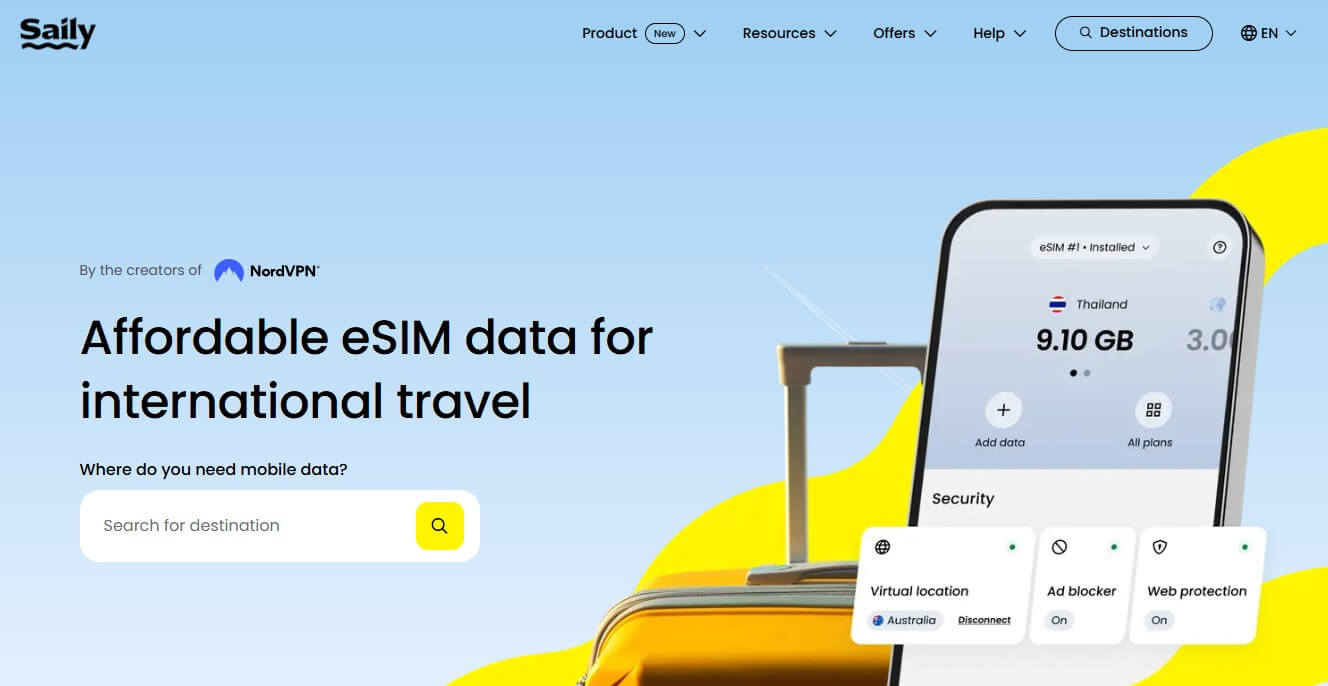
The best travel eSIMs let you switch profiles mid-trip without hassle, avoiding a tedious reconfiguration. Instead of juggling physical cards, you simply open your device’s cellular settings, tap the new profile, and activate it instantly—often while walking between countries. This is a lifesaver for multi-destination trips where coverage overlaps or data runs low. No need to scan QR codes again or reboot; the eSIM holds all profiles, ready for a one-tap swap. It’s seamless, keeping you connected through border crossings or network changes.
Switching profiles mid-trip without hassle means tapping one setting to instantly swap data plans, no cards or restarts needed.
Money-Saving Tips for Data-Hungry Travelers
For data-hungry travelers, the best eSIM for travel isn’t the cheapest per-GB plan, but one with a generous data cap and high-speed throttle. Prioritize plans from providers like Holafly that offer unlimited data at reduced speeds after your high-speed allowance runs out, preventing surprise top-ups. How do I avoid paying for unused data? Choose regional eSIMs covering your entire itinerary (e.g., a Europe plan) rather than separate country eSIMs, dropping costs by up to 40%. Always activate the eSIM upon arrival, not at home, to preserve your plan’s duration for actual travel days.
Regional plans versus single-country packs for cross-border trips
For cross-border trips, a regional plan often beats buying multiple single-country packs. If you hop between, say, France and Germany, a single European eSIM eliminates the hassle of swapping profiles and accumulating leftover data. However, single-country packs can be cheaper for a deep stay in one nation, as regional plans sometimes carry a premium for their broad coverage. Assess your itinerary: frequent border crossings make a Regional plan superior for seamless travel, while a single-country pack suits a week-long, single-destination visit.
| Scenario | Best Pick | Why |
|---|---|---|
| Multi-country itinerary (e.g., 3 days each in 4 countries) | Regional plan | One-time setup, no data gaps when crossing borders, usually cheaper than buying 4 separate packs. |
| Extended stay in one country (e.g., 2 weeks in Italy) | Single-country pack | Often has lower per-GB cost for that specific market compared to a broader regional option. |
Offline map downloads to reduce data usage
Pairing your best eSIM with pre-downloaded offline maps is the single most effective strategy to slash data usage while navigating abroad. Before departure, use Google Maps or Maps.me to download entire city or regional maps over Wi-Fi. This eliminates the need for constant mobile data refreshes, preserving your eSIM’s allowance for essential tasks. Even when connected, your phone will prioritize cached tiles over live downloads, drastically cutting background consumption.
- Navigate turn-by-turn without using a single megabyte of your eSIM data.
- Search for points of interest offline, avoiding data-triggered queries.
- Set maps to “offline only” mode in your app settings to prevent accidental data charges.
Wi-Fi hotspots as backup when coverage is poor
When your travel eSIM hits a dead zone, Wi-Fi hotspots as backup coverage save both your sanity and your data budget. Instead of blowing through expensive roaming top-ups, jump onto a café or hotel hotspot to handle heavy tasks like video calls or map downloads. Keep a list of local networks that offer free, reliable connections, and use a VPN for security. This way, you only use your eSIM data when Wi-Fi isn’t an option.
- Pre-download offline maps and city guides while on Wi-Fi to avoid using mobile data later.
- Switch your phone to airplane mode when connected to a hotspot to prevent accidental eSIM data drain.
- Use a password manager to quickly log into known public Wi-Fi networks without hassle.
Referral codes and promotional bundles

For data-heavy trips, many top eSIM providers offer referral codes and promotional bundles that slash initial costs significantly. Before purchasing, search for an active referral code from a current user or online community to get free credits or a discount on your first top-up. Additionally, look specifically for “welcome bundles” or “data packs” that bundle extra gigabytes at a promotional rate for new customers. These limited-time bundles often provide double or triple the usual data for the same price, making them ideal for heavy usage.
- Apply a referral code at checkout to receive bonus data or a monetary credit immediately.
- Select a promotional bundle (e.g., 10GB for the price of 5GB) to maximize your data cap on the first purchase.
- Check if the provider offers a multi-GB referral bonus that activates after your first completed trip.
Frequent Pitfalls to Avoid
A major pitfall is assuming “unlimited data” means high-speed, as many eSIMs throttle after a small fair-use cap. Purchasing a plan that expires in 30 days for a one-week trip wastes money. Avoid installing the eSIM only at the airport, where poor connectivity can stall activation. Another common error is failing to disable your physical SIM’s data roaming, which triggers unexpected charges. Users often buy a global plan when a regional or local eSIM offers far cheaper per-GB rates. Even reliable networks get oversold in dense tourist spots, so having a backup provider’s QR code saved locally is a smart safety net.

Buying a plan before checking device compatibility
One of the biggest mistakes travelers make is purchasing an eSIM plan without first verifying their device’s compatibility. A phone might be unlocked yet still lack esim device compatibility, often due to Japan eSIM carrier locks or region-specific hardware. You could end up with a worthless QR code and zero connectivity upon landing. Always use your phone’s IMEI number to check the manufacturer’s list before you buy; this tiny step saves you from losing both money and time when you need data most.
Overlooking voice and SMS needs on data-only plans
A frequent pitfall is choosing a data-only eSIM without checking your need for voice calls or SMS. Many travelers assume WhatsApp or iMessage suffice, yet a quick phone call to confirm a hotel booking or receive a two-factor authentication SMS fails without a cellular number. This oversight can leave you stranded. Always verify if your destination or critical services require a local number for verification codes. Check your essential services before buying. Q: What happens if I only buy a data eSIM and need to call a local restaurant? A: Without voice or SMS support, you cannot make the call; you must rely on a VoIP app or buy a separate voice-enabled plan.
Forgetting to deactivate after your trip
Forgetting to deactivate your eSIM after your trip is a frequent pitfall leading to unnecessary data charges or plan depletion if your package includes a timed allowance. Most travel eSIMs activate upon first connection and may continue draining your balance if the data profile remains enabled in your device’s cellular settings. This oversight can silently consume remaining high-speed data meant for future use. To avoid this, always disable the travel eSIM profile immediately upon return, either by toggling it off or removing the plan entirely. Neglecting this step undermines the cost-efficiency of even the best eSIM for travel.
Ignoring fair-use policies on unlimited plans
Ignoring fair-use policies on unlimited plans is a frequent oversight when selecting the best eSIM for travel. Many travelers assume “unlimited” means unrestricted high-speed data, but providers often throttle speeds after a specific daily or weekly threshold. This can render streaming, video calls, or navigation unusable during critical moments. Carefully checking the fine print for data caps before purchase can prevent sudden slowdowns in a foreign country. Always plan your usage around the stated fair-use limit rather than the marketing label.
Ignoring fair-use policies on unlimited plans leads to throttled speeds and unreliable connectivity, undermining the value of a travel eSIM.
Why a Travel eSIM Outperforms Traditional SIM Cards Abroad
Instant activation without hunting for local stores
Keeping your home number active while using a data plan
No need to fumble with tiny SIM trays or risk losing your original card
Key Features That Define the Top-Rated Travel eSIM Plans
Global versus regional coverage and how to match it to your itinerary
Data speeds, throttling policies, and the difference between 4G/LTE and 5G access
Multi-country packages versus single-country eSIMs for multi-stop trips
How to Choose the Right Travel eSIM for Your Device and Destination
Checking your phone’s eSIM compatibility before you buy
Comparing data allowances, validity periods, and per-day pricing
Reading between the lines: fair usage policies and hidden top-up costs
Practical Tips for Installing and Activating Your Travel eSIM
Scanning a QR code versus manual setup on iOS and Android
Configuring data roaming and APN settings to avoid expensive slip-ups
Installing your eSIM before departure to grab coverage immediately upon landing
Common Mistakes Travelers Make When Using an International eSIM
Forgetting to disable your primary line to prevent dual-carrier billing
Choosing a plan with too little data for map use, streaming, or work calls
Overlooking eSIM troubleshooting steps for devices that lose connectivity mid-trip
